
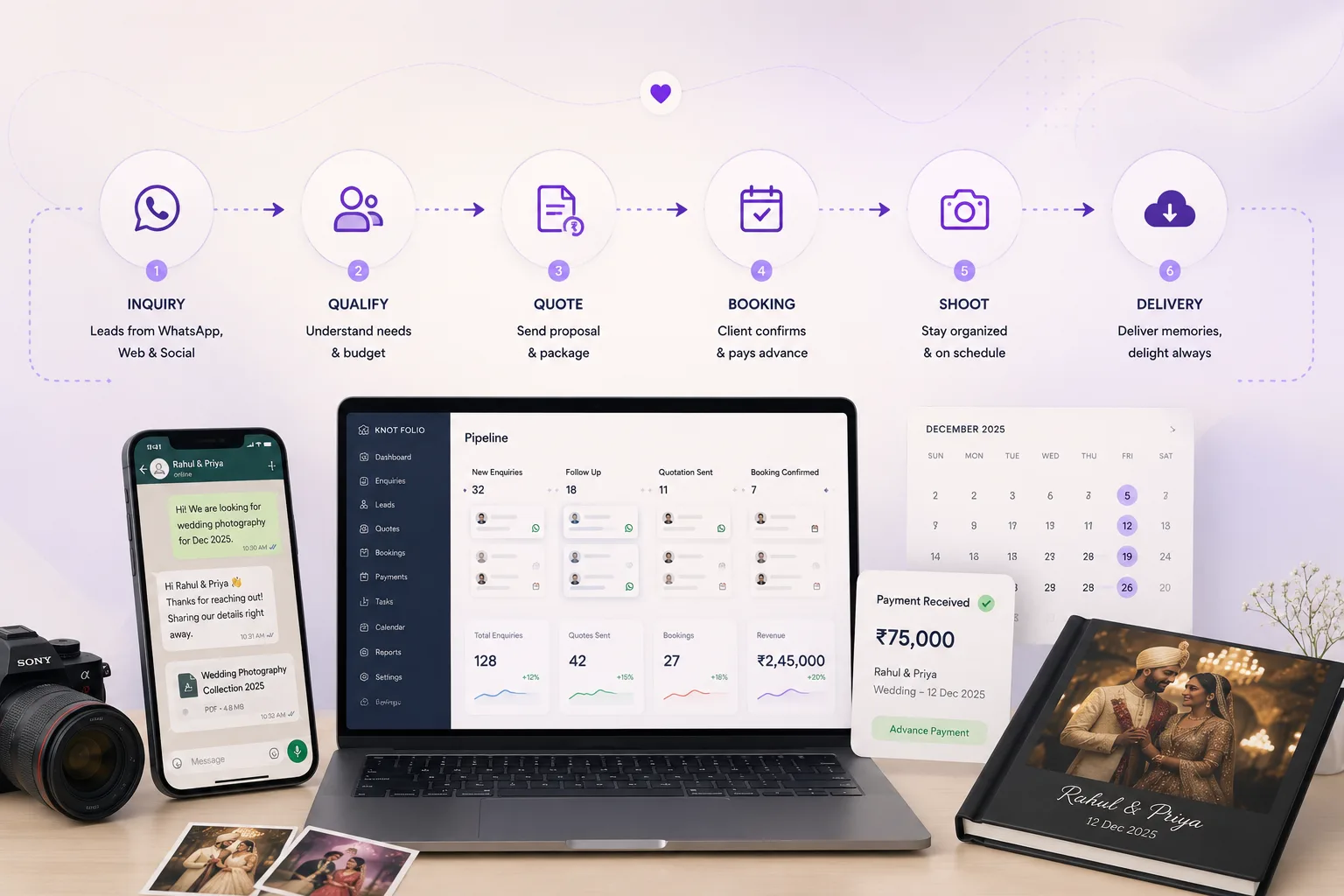
Map the full wedding client journey
Wedding projects are longer and more layered than many other photography engagements. There are multiple stakeholders, planning milestones, venue variables, budget questions, timeline changes, and deliverables that unfold over time.
Efficiency begins when the team stops treating the journey as one endless thread and starts breaking it into operating stages: inquiry, qualification, consultation, quote follow-up, booking, planning, shoot readiness, delivery, and post-delivery closure.
Once those stages are named, it becomes much easier to assign reminders, define ownership, and understand which details should be captured at each step.
Standardize the moments that repeat every season
Every wedding studio has checkpoints that happen again and again: new inquiry response, brochure send, consultation booking, quote follow-up, deposit request, questionnaire collection, final timeline confirmation, and balance reminders.
When those moments are documented and supported by templates or automation, the team does not need to rebuild the same workflow from scratch every time. That improves both speed and consistency.
Standardization also protects quality. Clients feel guided because every key step is covered, not because the team is working frantically in the background.
- First-response templates that still feel brand-right
- Defined follow-up windows after consultations and quote shares
- Clear payment checkpoints for deposit, milestone, and balance
- Structured planning requests for venues, family timings, and logistics
Keep context visible for the whole team
Wedding operations often break when one person carries too much context privately. A coordinator remembers the venue issue, a founder remembers the pricing nuance, and the shooter remembers the family request. None of that is reliable if it is not visible to everyone who needs it.
A better system keeps package interest, message history, planning notes, due payments, files, and upcoming tasks visible to the broader team. That means handoffs can happen without repeated briefing calls or frantic message searches.
The result is not just efficiency. It is a calmer internal culture, because fewer things depend on memory alone.
Treat production week and delivery like part of the same client journey
Many studios are organized during the sales phase and then become reactive during the wedding week and delivery period. That split is expensive because the client still experiences those stages as one relationship with one brand.
Production week should have its own visible checklist: confirmations, location updates, shot priorities, vendor notes, balances due, and internal team responsibilities. Delivery should be no different, with status updates, gallery milestones, album approvals, and closeout reminders tracked intentionally.
Clients remember how organized you felt when the stakes were highest. That is why operations after the booking matter just as much as the booking itself.
Use every season to refine the system
Wedding operations improve fastest when the team reviews what repeatedly caused delay or confusion. Which reminders came too late? Which consults lacked the right prep? Which balances stayed pending longer than expected? Which delivery questions kept repeating?
Those answers turn into better stages, better templates, and better automations for the next cycle. A strong client-management system is not static. It gets sharper with every season of real use.
That is what makes efficiency sustainable. It is not about perfection. It is about running the same core workflow a little better every quarter.
How Knot Folio keeps wedding workflow context in one record
Knot Folio helps wedding teams keep inquiry notes, quotation follow-up, payment milestones, and delivery steps in the same client flow.
That reduces handoff friction and makes it easier for the whole studio to see what is next without relying on memory or scattered messages.