
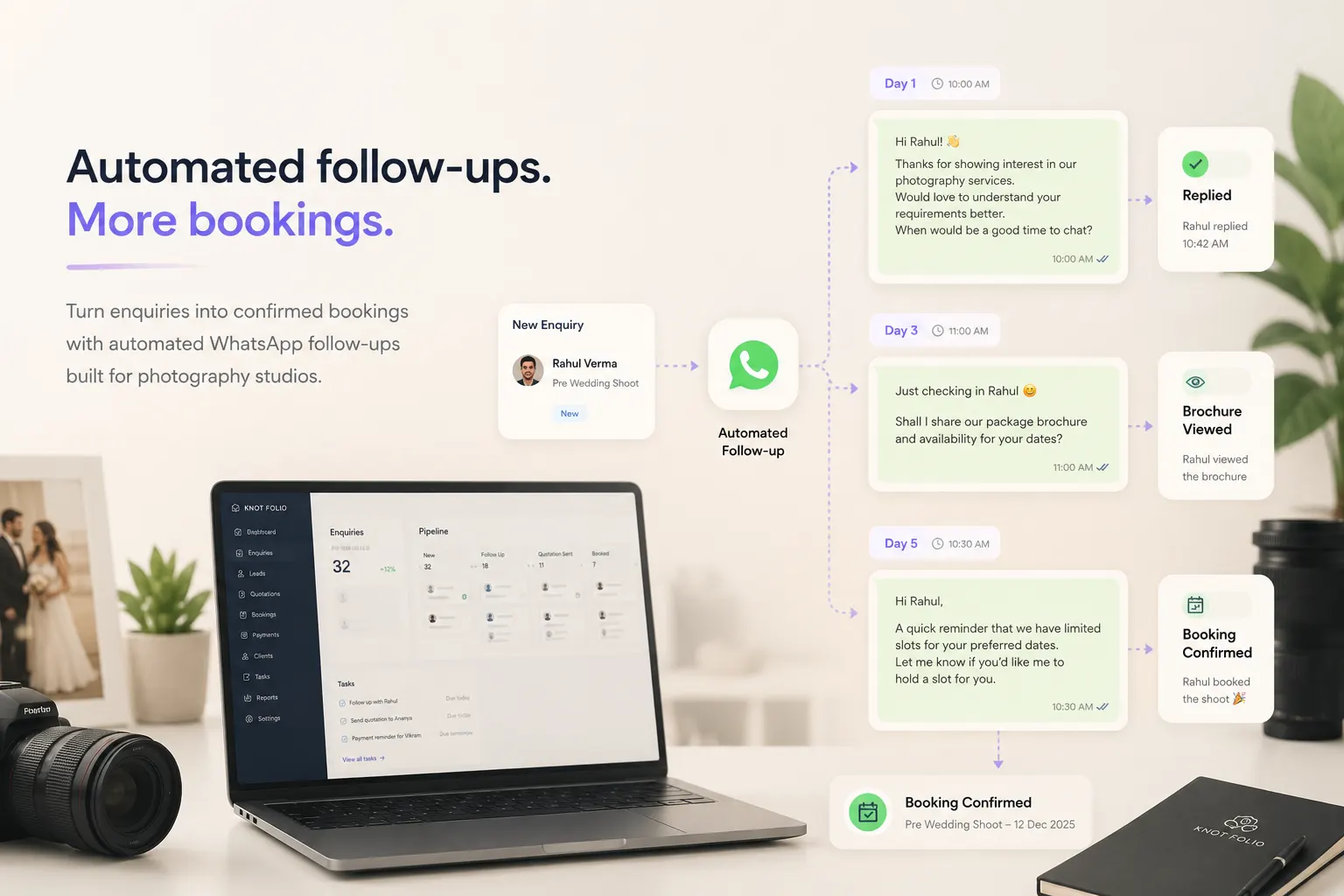
Why follow-ups fall through in busy studios
Most follow-up failures are not about poor intent. They happen because the same team is juggling new inquiries, ongoing consults, payment reminders, reschedules, and delivery updates all at once. The work is happening, but the timing slips.
WhatsApp makes the problem worse and better at the same time. It is fast, familiar, and where many clients prefer to talk. But because it feels informal, teams often rely on memory rather than a system to know who needs a reply next.
That means a warm lead can sit untouched for two days simply because no one had a clean list of conversations that required action. Automation fixes that visibility problem before it becomes a revenue problem.
What to automate first
The best starting point is the set of messages that are expected, repeatable, and low risk. These are the places where speed and consistency matter more than improvisation, and where a delay often costs momentum.
You do not need a complicated sequence on day one. One or two well-timed nudges at the right moments usually outperform a sprawling automation tree that nobody on the team fully trusts.
- Initial brochure and package guide shares
- Gentle check-ins after a client has viewed pricing
- Consultation reminders with timing and preparation details
- Invoice and payment nudges tied to due dates
- Pre-shoot coordination prompts for details the team needs
How to keep automation human
Human-sounding automation starts with tone, but it does not stop there. A warm message also needs the right timing, enough context, and a next step that feels helpful rather than pushy. If a follow-up reads like it could be sent to any lead in any industry, it probably will not land well.
The most effective teams write templates the same way they would brief a new coordinator: use the brand voice, mention the context the client already knows, and make the next action easy. A short, natural reminder is usually stronger than a long polished script.
It also helps to vary the purpose of the follow-up. One message can answer a likely question, the next can offer a consult slot, and another can clarify the booking step. That feels much more thoughtful than repeating the same nudge in different words.
Know when a person should step in
Automation works best when it qualifies, reminds, organizes, and reactivates. Human attention should take over for pricing nuance, emotional reassurance, negotiation, timeline complexity, or any situation where a client needs a sense of care more than a fast response.
This is why stage-based rules matter. If a lead asks a detailed question about custom coverage, or if a couple seems anxious about date planning, the system should flag the conversation for a person rather than keep the automation chain running.
That handoff is not a failure of automation. It is proof the system is doing its real job, which is getting the right work to the right person at the right time.
How to tell if the follow-up system is working
Track a few practical measures instead of vanity metrics. Look at how fast the first response goes out, how many warm leads receive a follow-up within your target window, and whether consultations or invoices move faster after the system is live.
You should also listen qualitatively. Do clients sound confused by the reminders? Does the team trust the automation enough to stop manually checking everything? Are fewer good conversations falling through just because nobody remembered to circle back?
If those answers improve, the automation is doing what it should. It is reducing operational drag without flattening the brand voice.
How Knot Folio keeps WhatsApp follow-ups visible
Knot Folio keeps WhatsApp follow-ups attached to the lead record, so reminders are not lost inside a busy inbox.
That makes it easier to send the right message at the right time, keep the tone warm, and see exactly which enquiry still needs attention.